What "Full Coverage" Actually Means for Car Insurance
"Full coverage" isn't a legal term. It usually means liability plus collision and comprehensive. What it includes, what it leaves out and what to ask.
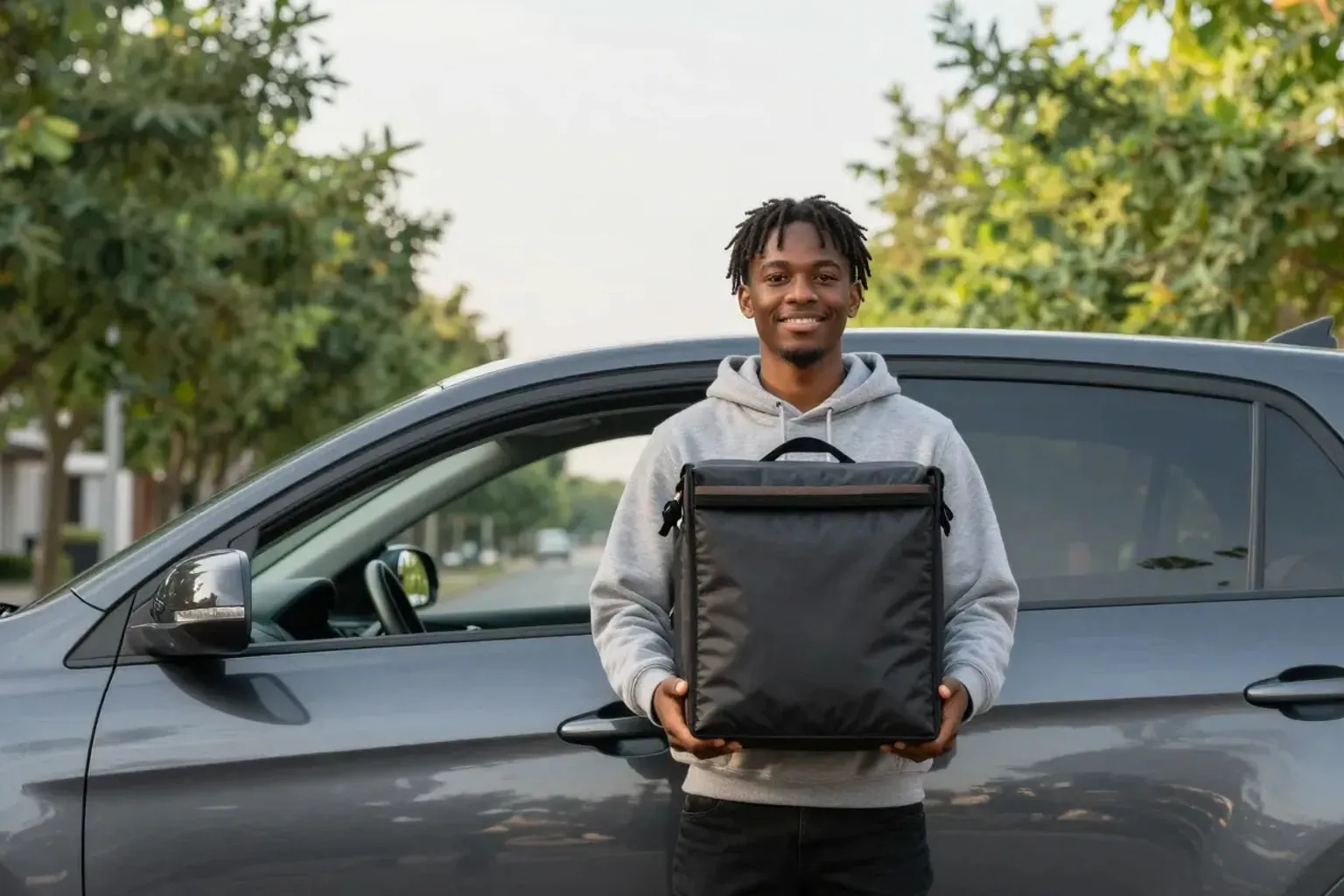
A lot of people in their twenties have the same idea at some point: the car is already paid for (or mostly), the evenings are open, and an app will send you paying work the moment you tap “go online.” It’s a reasonable plan. The part almost nobody thinks about until something goes wrong is that a standard car insurance policy is written for personal driving, and driving for money is a different risk. This page walks through where your coverage stops, what the apps actually provide, and how to fill the space in between without paying for more than you need.
You should be reading this if any of these sound like you:
You can probably look elsewhere if you only use your car to commute to a regular job. Commuting usually falls under personal use. If you’re a brand-new driver still sorting out your first policy, start with our first-car and young driver auto insurance page, then come back here before you start gig work.
One more group: if your driving record already has a few marks on it, or a court has required you to file proof of insurance, some gig-friendly coverage options may be harder to get. Our page on high-risk auto and SR-22 filings explains how that works.
The insurance industry splits app driving into phases. The National Association of Insurance Commissioners (NAIC), the group of state insurance regulators, describes three periods for ride-hailing in its overview of commercial ride-sharing (opens in a new tab). Here is how a typical shift moves through them, with “offline” added at the start:
Why it matters: many personal policies exclude “livery” or driving for compensation. NAIC notes that the model rules many states based their laws on expressly allow a personal insurer to exclude ride-hailing activity. The Insurance Information Institute (Triple-I) makes the same point in its ride-sharing Q&A (opens in a new tab), adding that the commercial-use exclusion can apply to any business use of a personal car, not just passengers.
Imagine you open the app after work, cruise toward a busy neighborhood to wait for orders, and get rear-ended at a light before a request comes in. Depending on your policy and platform, your own insurer may say you were working, the app may say you hadn’t accepted anything yet, and you could be paying for your bumper yourself.
The two biggest apps publish their own coverage summaries. Here is how they describe it for US drivers, as of our October 2026 review. Limits and rules vary by state and change over time, so check the platform’s current page and certificate of insurance for your state.
| Phase | Your personal policy (no add-on) | Uber rideshare coverage | DoorDash delivery coverage (most states) |
|---|---|---|---|
| App off | Applies normally | None | None |
| App on, waiting | Often excluded | Liability to others only: $50,000 per person / $100,000 per accident for injuries, $25,000 property damage | None; DoorDash says your personal policy is primary here |
| Request accepted, en route | Often excluded | At least $1,000,000 liability | Liability to others; limits vary by state |
| Passenger or order on board | Often excluded | At least $1,000,000 liability, plus damage to your car up to actual cash value if you carry comprehensive and collision, with a $2,500 deductible | Liability to others; limits vary by state |
| Damage to your own car | Only if not excluded | Contingent, trip phases only | Not covered |
Sources: Uber’s US driver insurance page (opens in a new tab) and DoorDash’s Dasher auto insurance article (opens in a new tab). DoorDash lists a handful of states (North Dakota, Indiana, Kentucky and West Virginia) where it also provides some liability coverage while you’re logged in and available. Uber says its delivery insurance is separate from its rideshare insurance, so the rideshare column above doesn’t apply to Uber Eats trips.
A few terms, defined:
We can’t quote a number on a web page, because real prices depend on details only a quote can capture. These are the factors that matter most for gig drivers:
Also count the money side beyond insurance. The IRS set the 2026 business standard mileage rate at 72.5 cents per mile (opens in a new tab). Independent contractors can generally use that rate or deduct actual vehicle costs instead. The IRS notes that if you own the car, you need to choose the standard rate in the first year you use it for business if you ever want it; if you lease, choosing the standard rate locks you in for the whole lease. Ask a tax professional how this applies to you, and track every app mile from day one.
Auto insurance doesn’t have an open enrollment season. You can change it any time. The moments that matter for gig drivers are:
Before you talk to us or shop on your own, gather this:
Our licensed agents help gig drivers sort this out, and the process is straightforward:
Side-gig driving can be a smart way to use a car you already have. The trick is knowing which phase you’re in and who pays if something happens. If you want a second set of eyes on your current policy before your next shift, book a free consultation with a licensed agent. There’s no cost to work with us, and we’ll leave you with a clear picture of your options, whether you buy anything or not.
Often it doesn't. Many personal policies exclude driving for pay or livery use, and the NAIC notes that model state rules expressly let personal insurers exclude ride-hailing activity. Some insurers sell an add-on that restores coverage for app driving, so the answer depends on your policy wording and your state.
It's the stretch when your app is on but you haven't accepted a request yet. Your personal policy may exclude that time, and the app's coverage during that phase is usually liability only with lower limits. That leaves damage to your own car and some of your own injuries exposed unless you add coverage.
No. Platforms treat delivery and rideshare separately, and state rideshare laws were written mainly for passenger trips. DoorDash, for example, says its auto liability coverage in most states starts when you accept an order and doesn't cover damage to your own car. Read each platform's insurance page for the mode you actually drive.
Sometimes, but usually with conditions. Uber, for example, says its coverage for your own car during a trip applies only if you carry comprehensive and collision on your personal policy, and it comes with a $2,500 deductible. If you carry liability only, that protection may not be there.
Tell them before your first shift. Hiding it doesn't make the exclusion go away; it just means you find out about the gap after a claim, when the insurer can deny it or decide not to renew. Disclosing it lets you add the right coverage up front.
No. An endorsement is an add-on to a personal policy that typically covers the app-on time until a trip or delivery is accepted, then the platform's coverage takes over. A commercial policy is built for heavier business use and may be needed if you drive full-time, use your car for your own delivery business or work for a platform that doesn't provide coverage.
A crash in hour one is just as expensive as a crash in hour forty. Light use can affect how an insurer prices your endorsement, but it doesn't change whether the exclusion applies. If you drive for pay at all, ask how your policy handles it.
Independent contractors can generally deduct business driving. The IRS set the 2026 business standard mileage rate at 72.5 cents per mile, and you can choose either that rate or your actual vehicle costs, with some rules about switching. A tax professional can help you choose and keep the right records.
Generally not. Platforms cover the approved driver on the account, and letting someone else drive under your login can break both the platform's terms and your coverage. Only you should drive while the app is on.
Last reviewed by the Wrenfield Licensed Agent Team on October 19, 2026.
Important information
Auto insurance rates, discounts and coverage options vary by state, carrier, driver and vehicle, and all discounts are subject to eligibility. State minimum liability requirements differ; minimum limits may not fully protect you after a serious accident.
Plans, benefits and pricing vary by state and carrier. Quotes aren’t final until the carrier issues a policy.
Keep learning
"Full coverage" isn't a legal term. It usually means liability plus collision and comprehensive. What it includes, what it leaves out and what to ask.
Telematics programs price your car insurance on how and how much you drive. What they track, who tends to benefit and what to ask before you enroll.
A first speeding ticket or at-fault crash can raise your car insurance for about three years. How surcharges work, what doesn't count and what to do next.